
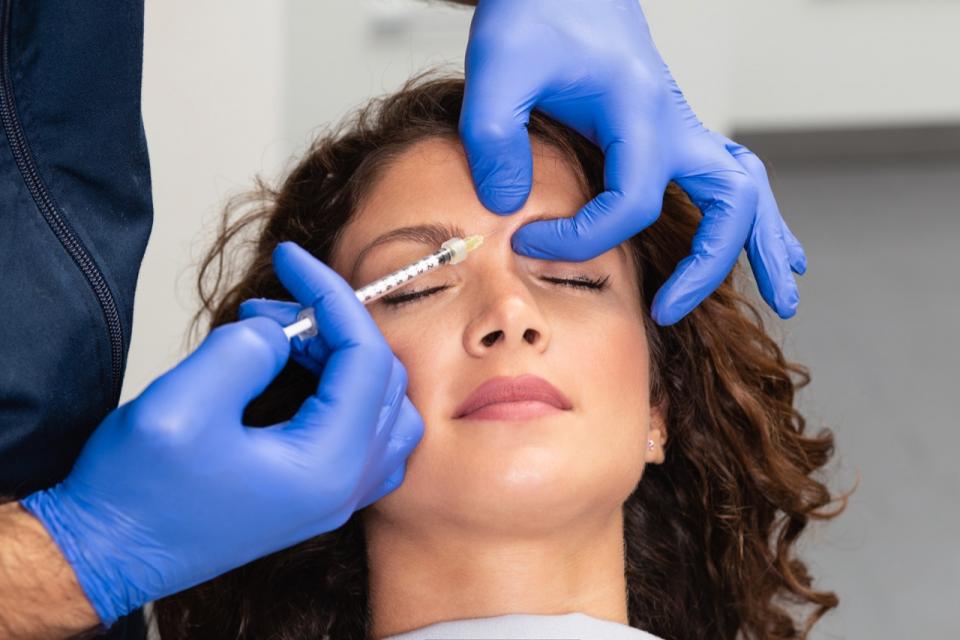
When you hear the word “Botox,” you probably think of forehead wrinkles. But Botox at the dentist is about much more than esthetics! Since 2025, the Ordre des dentistes du Québec (ODQ) has allowed dentists who have completed the required training to use botulinum toxin (a neuromodulator) for both therapeutic and esthetic purposes.
So what can Botox actually do in a dental clinic? And why have your dentist perform the treatment? Here’s what you need to know.
What exactly is Botox?
Botulinum toxin type A (often called “Botox,” after a well-known brand) belongs to a family of treatments called neuromodulators. Injected in very small doses, it temporarily relaxes a targeted muscle by blocking the signal between the nerve and the muscle, so the muscle contracts less forcefully.
The effect usually appears within a few days and lasts about 3 to 4 months. The muscle then gradually regains its strength.
Why get Botox from a dentist?
Dentists know the anatomy of the face, the chewing muscles and the jaw joint inside out. They also give injections every day (think local anesthesia!). That makes them well positioned to use neuromodulators around the mouth and face, taking into account both function and the harmony of your smile.
Therapeutic uses of Botox in dentistry
1. Bruxism (teeth grinding or clenching)
Do you wake up with a sore jaw or headaches? Has your dentist noticed wear on your teeth? Bruxism could be the culprit.
An occlusal splint (the classic “night guard”) remains the first-line treatment to protect your teeth. For some patients, injections into the masseter muscles can be added to reduce clenching force and relieve the muscle pain that comes with it.
2. Jaw pain and TMJ disorders
When jaw pain comes mainly from the muscles (myofascial pain), Botox can be a complementary option when conservative approaches (splint, physiotherapy, exercises, stress management) aren’t enough. Results vary from person to person, so a thorough assessment is essential before considering it.
3. Masseter hypertrophy
In heavy clenchers, the masseter muscles can become very developed, widening the lower face. By relaxing these muscles, botulinum toxin can reduce their volume over time, offering both functional relief and an esthetic benefit.
4. Gummy smile
Do you feel your gums show a lot when you smile? When the cause is an upper lip that lifts too high, a small dose of botulinum toxin can soften that movement. It’s a simple, non-surgical option that can also complement other treatments such as orthodontics or veneers.
Esthetic uses: upper and lower face
Trained dentists can also offer esthetic treatments with neuromodulators. For a dentist, this is often a natural extension of smile work: facial harmony is part of the final result.
- Upper face: softening forehead lines, frown lines (between the eyebrows) and crow’s feet.
- Lower face: jawline slimming (masseters), gummy smile, fine lines around the mouth, dimpled “orange peel” chin and downturned mouth corners.
Is Botox safe?
When administered by a trained professional, at the right dose and in the right place, botulinum toxin is a well-documented treatment. Like any procedure, it does carry possible side effects, which are usually mild and temporary:
- minor bruising or tenderness at the injection site;
- short-lived headaches;
- a feeling of fatigue when chewing hard foods;
- more rarely, a slight asymmetry of the smile.
Some situations call for postponing or avoiding treatment, including pregnancy and breastfeeding, certain neuromuscular diseases, an infection at the injection site, or certain medications. That’s why your dentist will review your medical history first.
Botox at Chez Soie Dentisterie
At Chez Soie Dentisterie, neuromodulator injections are performed by Dr. Justin L. Bombardier, who has completed the training required by the ODQ. He offers:
- functional treatments for bruxism, clenching and jaw muscle pain;
- upper and lower face esthetic treatments, complementing our cosmetic and functional dentistry services.
Every treatment starts with a personalized assessment of your muscles, your jaw and your expectations, to determine whether Botox is a good option for you and to discuss other possible solutions.
Key takeaways
- Botox at the dentist isn’t just cosmetic: it can help relieve bruxism and some types of jaw pain.
- Its effect is temporary (about 3 to 4 months) and doesn’t replace other treatments, such as a night guard.
- In Quebec, dentists must meet the ODQ’s training requirements to use it.
- Every case is unique: a personalized assessment is always the first step.
Do you clench your teeth, often have jaw pain, or want to learn more about esthetic treatments? Contact us to book an appointment with Dr. Bombardier.
This article is for information purposes only and does not replace a consultation with a health professional.
Comments are closed.